

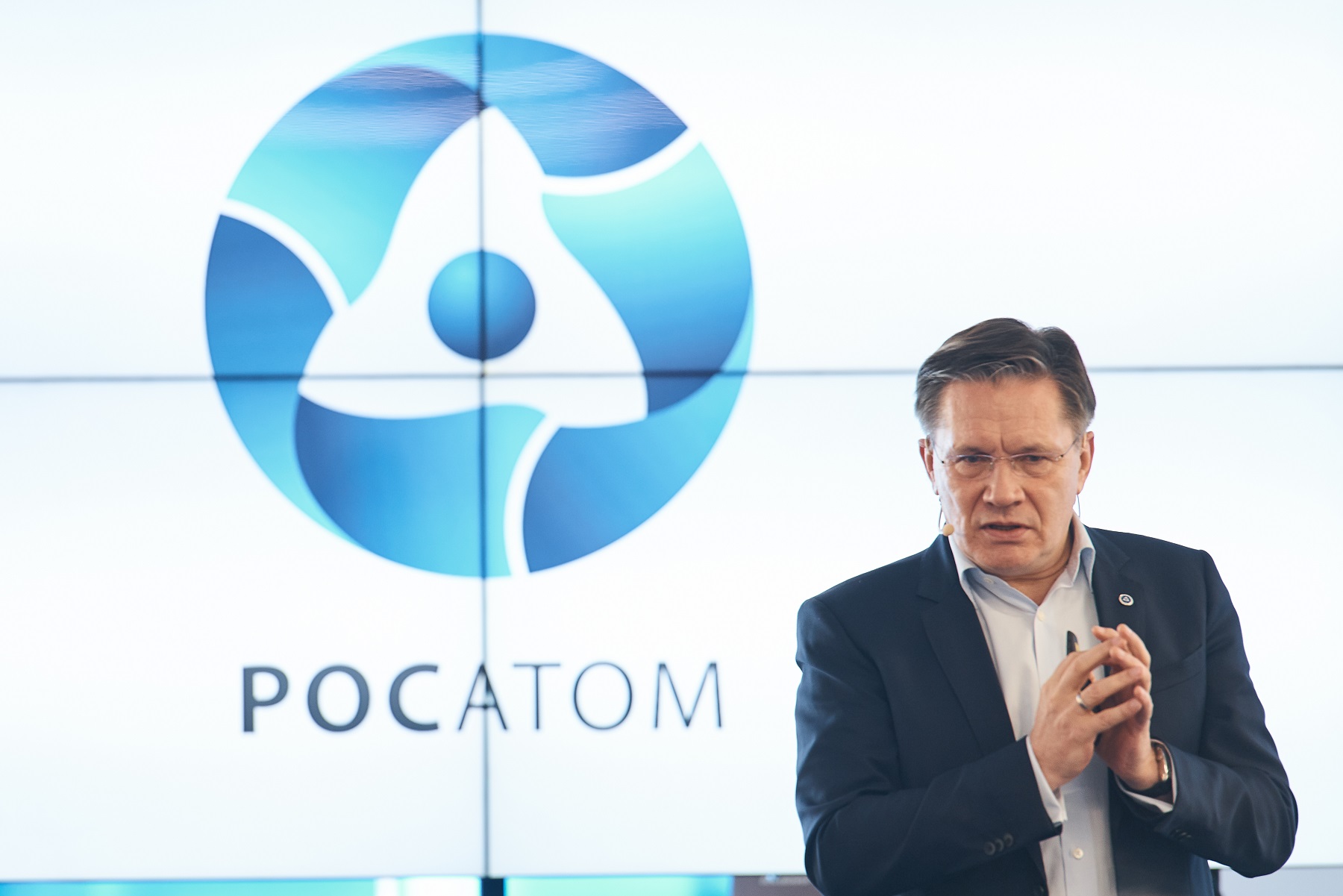

BRICS need to develop talent ecosystem to bridge skills gap in professional force: DG Rosatom
Chennai, Dec. 2019
The member countries of BRICS (Brazil, Russia, India, China and South Africa) grouping have been net exporter of talent so far, and now the need has come to reverse the trend and build a “talent development ecosystem”, said the Director General of Russia`s Rosatom State Atomic Energy Corporation Alexey Likhachev.
Rosatom State Atomic Energy Corporation is technical consultant and main equipment suppliers for the Kudankulam Nuclear Power Plant in Tamil Nadu, India.
Comparing the ever-growing chasm in the requirements of the world industry including nuclear and the skill set of the professional force, to the climate change in terms of proportion, Alexey Likhachev called for a comparable response on an international scale.
The Rosatom DG said that the BRICS countries can benefit from taking a cue from the United States programme RETAIN (Regional Talent Innovation Networks) and Denmark’s Flexicurity, he said that when a specialist is made redundant, he or she can be offered an option to upgrade their qualifications or switch to another speciality at a local retraining centre to obtain skills required for a different job – all, free of charge. The retraining courses can be funded in parts by employers and state subsidies.
Likhachev added that the skill gap is another global problem of comparable scale (to climate change) and it continues to remain neglected by political leaders who were short-sighted to see it as an afterthought. “Paradoxically, while graduates and mid-career professionals struggle to find an appropriate job, it takes years for employers to recruit the required staff to key positions,” Likhachev told journalists.
The digital revolution, said Likhachev, brought by breakthroughs in robotics and Artificial Intelligence technologies and transition to clean energy has brought fast-paced change across the globe. “The existing personnel training and talent management systems are lagging behind the ever-changing situation,” he added. Quoting statistics, Likhachev said that more than a billion people worldwide, or nearly a quarter of the world’s entire employed population, are either under or over qualified for the job they are doing now. “The world’s energy sector on the whole, and the nuclear energy industry in particular are the areas, where the personnel gap has been particularly acute over the last decade,” he added.
The DG Rosatom contended that as the skills crisis problem is, in terms of its scale, at par with that of the climate change, it requires the comparable coordinated response at the international level. “The world needs a global talent development ecosystem that would unite individual countries and companies into cross-border skills networks. In such a system, each participant would have access to a single database, pool of ideas and free exchange of information.
Unfortunately, as of now, this concept cannot be implemented,” Likhachev said. He said that an international task force on the lines of Intergovernmental Panel on Climate Change (IPCC), can be set up to tackle the skill crisis and the talent deficit.